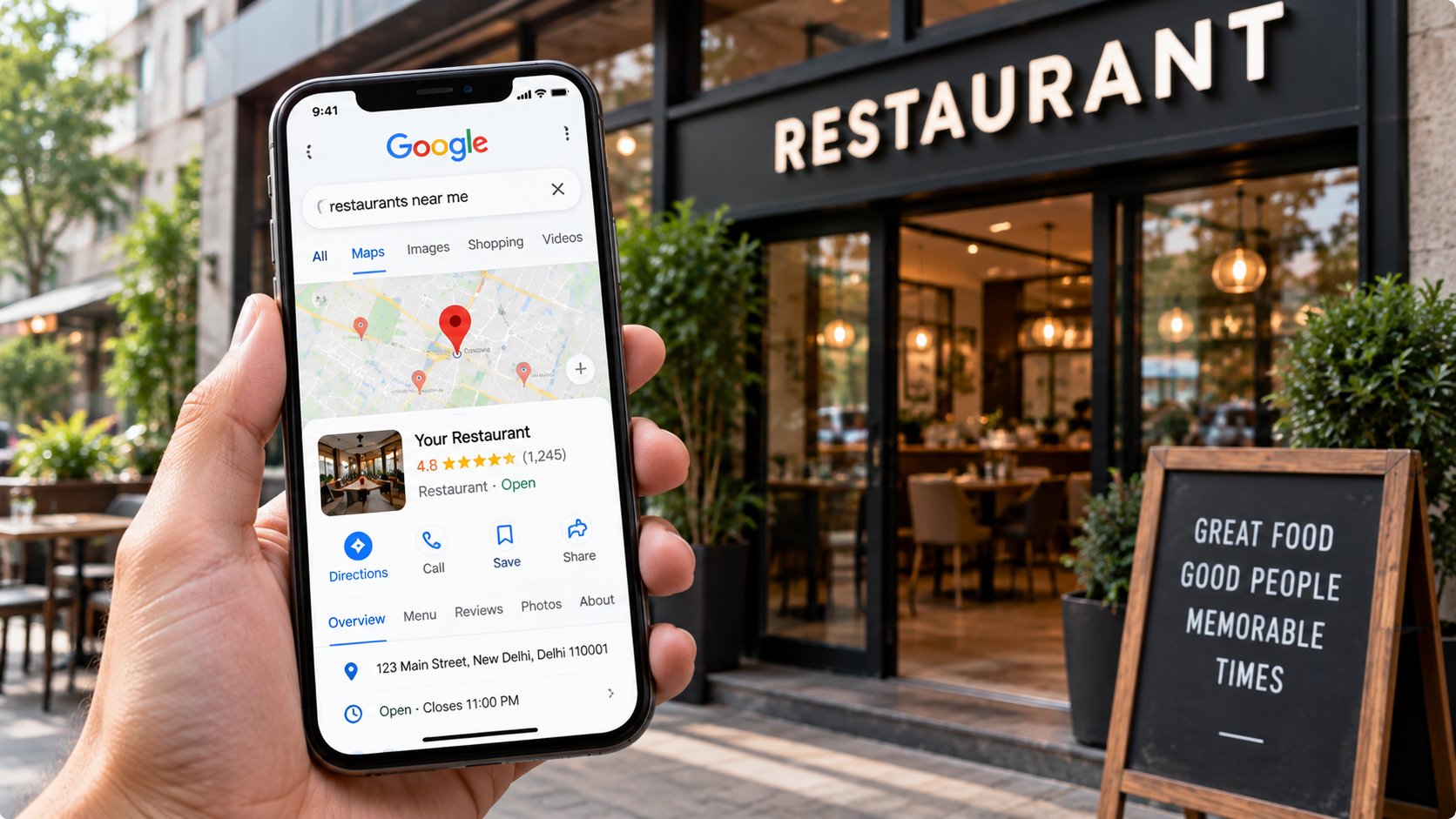
The most common question we get about local search is "what position are we". It is the wrong question, and answering it accurately is the first step to fixing the problem.
A restaurant does not have a Google Maps position. It has a visible radius. You might sit first in the map pack for someone standing outside your door, third for someone five hundred metres away, and be entirely absent for someone two kilometres out searching the same words. All three of those are your ranking, simultaneously.
Measure it as a grid
The practical method is to check your ranking for your main dishes at many points spread across the area you can realistically serve, and plot the results. What you get is a map of where you are visible and where you disappear — and critically, which competitor is holding the space beyond your edge.
That single change in measurement reframes the whole exercise. You stop asking "how do we rank higher" and start asking "how do we push the edge outward", which has a much clearer answer.
The three factors, and which you can move
Google weighs three things for local results:
- Relevance — how well your listing matches what was searched.
- Distance — how close you are to the searcher.
- Prominence — how established and well-known your business appears.
Distance you cannot change. Relevance and prominence are the entire job, and they are what determines how far out your visible radius extends before distance overwhelms them.
Relevance: be specific, not broad
Relevance comes mostly from the profile itself. The primary category is the heaviest single lever — being a "Biryani restaurant" rather than a generic "Restaurant" makes you a strong match for a narrower set of searches instead of a weak match for a wide one.
After that: the structured menu (which contains the dish names people actually search), the services and attributes, the business description, and the terms used in your Google Posts. Every one of these tells Google what you are, and every empty field leaves it guessing.
Prominence: reviews, activity and consistency
Prominence is where most of the movement comes from once relevance is sorted.
Review volume and recency. A steady flow of new reviews signals an operating business. A large number of old reviews does not carry the same weight.
Response rate. Replying to reviews consistently is associated with actively managed listings — and it visibly changes how your listing reads to a person comparing you with a competitor who replies to nothing.
Profile activity. Weekly posts and monthly photo additions keep the listing current. Posts have a short lifespan, so consistency is the whole point.
Citation consistency. Your name, address and phone number identical across Google, Apple Maps, Bing Places, delivery platforms and directories. In the UAE this is genuinely difficult, because addresses here are often described by building name, community and landmark rather than by street number, and the same location can be written five different ways across five platforms. Pick one canonical format and use it everywhere.
Density changes the strategy completely
Where competitors are spread out, distance dominates and your radius is limited by geography more than by effort. Where competitors are packed together — a JLT tower cluster, a Sharjah food street, a mall food hall — distance separates nobody, and relevance and prominence decide everything.
That is why the same tactics produce wildly different results in different emirates. In Dubai you are usually fighting to be visible three kilometres out against dozens of optimised competitors. In Ajman, three kilometres covers a substantial share of the residential population and very few competitors have complete listings at all.
What to do this month
- Run a grid check so you know where your visibility actually stops.
- Fix the primary category and add the full menu to Google's structured fields.
- Clear the review backlog and put a route in place for new reviews.
- Start publishing weekly and adding photos monthly.
- Standardise your business details everywhere they appear online.
- Re-run the grid in six weeks and compare.
None of this is complicated. It is just maintained rather than done once, which is precisely why so few restaurants do it — and why automating the recurring parts makes the difference between a plan and a result.