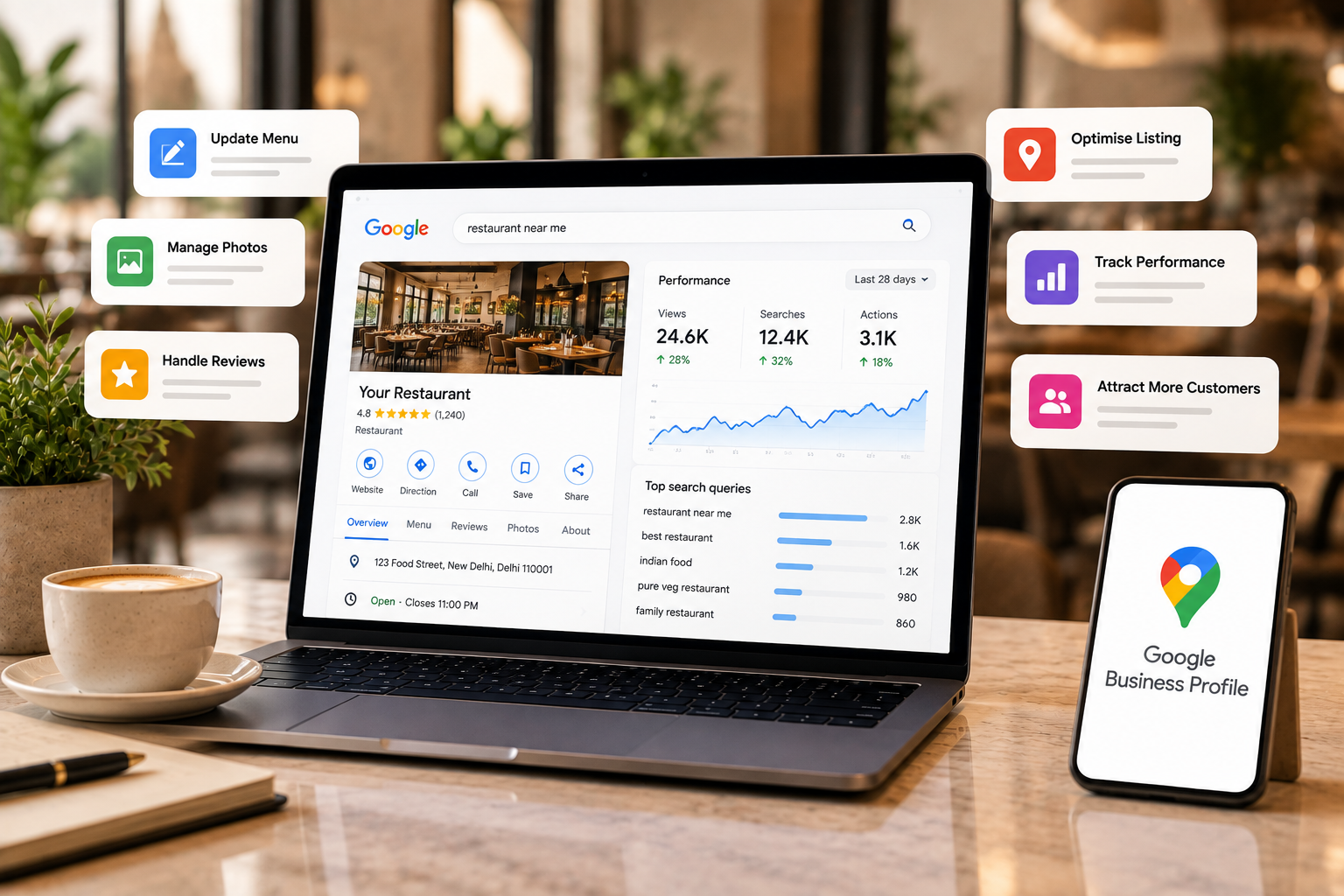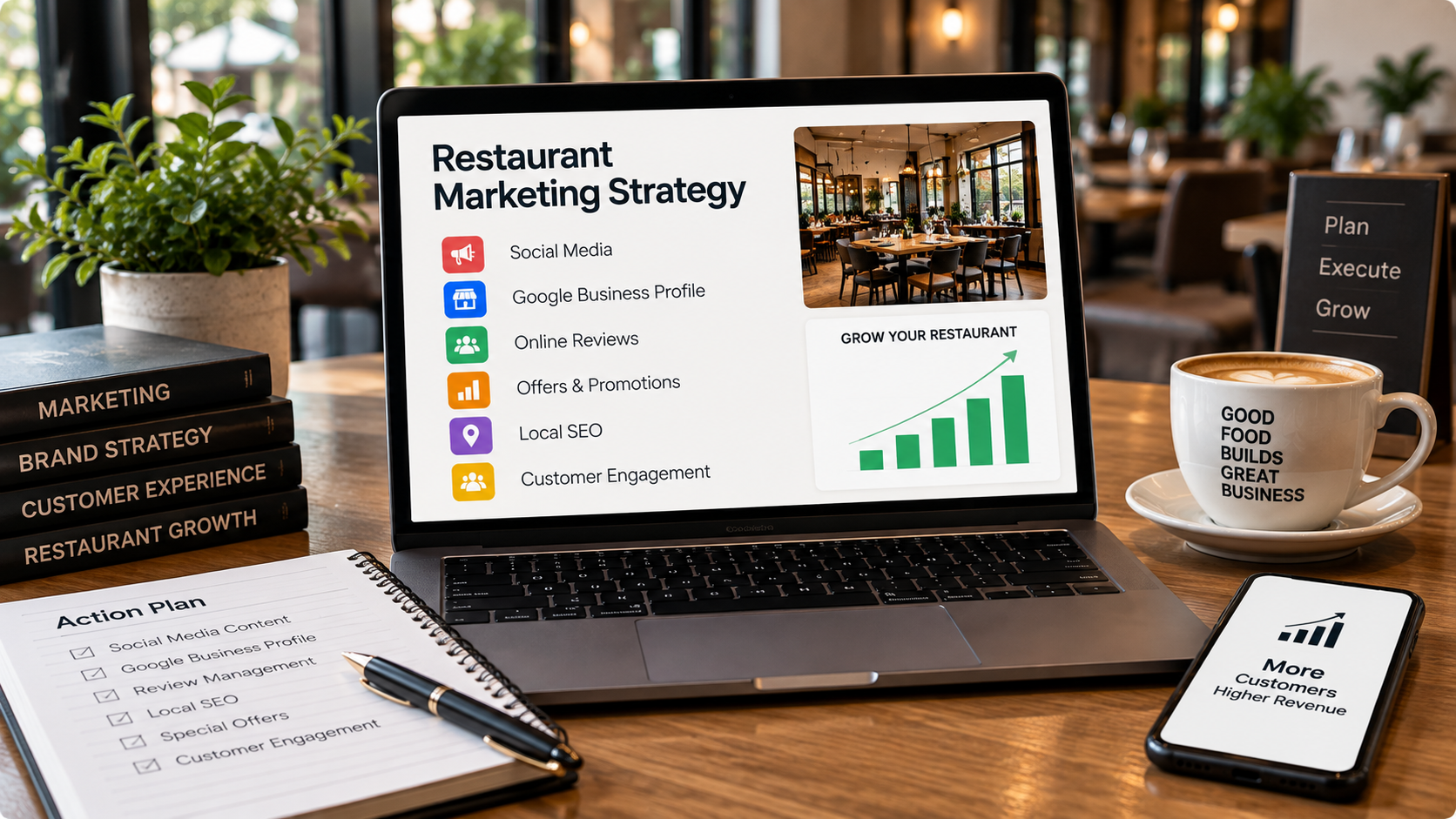
Review count is one of the clearest signals separating restaurants that rank in the map pack from restaurants that do not, and it is also one of the easiest to influence. Yet the typical restaurant we audit has served tens of thousands of guests and collected a few hundred reviews.
That gap is almost never a quality problem. It is an asking problem.
Why reviews matter more for restaurants than for most businesses
Two reasons. First, reviews feed the prominence signal that helps decide map pack ranking — count, rating, recency and your reply rate all contribute. Second, and more immediately, reviews are the deciding factor in a comparison that takes about fifteen seconds. Someone looking at three nearby options is not reading carefully; they are glancing at the rating and the count and forming a judgement about reliability.
There is a third, less obvious effect: the words in your reviews help Google understand what you sell. When dozens of guests mention the biryani, the karak or the weekend brunch, that language becomes part of how your profile is understood and matched to searches. Reviews are, in a real sense, keyword content you did not have to write.
What Google actually permits
Worth being precise here, because the rules are widely misunderstood in both directions.
Allowed: asking customers for reviews, asking all of them, making it easy with a QR code or link, reminding them once, training staff to mention it, and replying to every review you receive.
Not allowed: offering any incentive in exchange for a review — discounts, free items, entry into a draw; review gating, meaning asking only the customers you expect to be positive; discouraging or offering to remove negative reviews; writing reviews yourself or having staff write them; and buying reviews from a service.
The enforcement risk on the prohibited items is real: reviews get stripped, and profiles can be suppressed. It is also self-defeating. A rating propped up by bought reviews sets an expectation the restaurant cannot meet, and the correction arrives in the form of genuine one-star reviews from disappointed guests.
The moment of asking is everything
Review requests succeed or fail almost entirely on timing. You are asking for a small favour, and the answer depends on how the person feels in that specific moment.
Dine-in. The best moment is just after the plates are cleared and the guest has said something positive, or at payment while they are still seated. Not as they stand to leave, and not by email the next day.
Delivery. Inside the packaging, so it is seen while the food is being unpacked — the peak of the experience. A card in the bag outperforms any follow-up message.
Takeaway. At the counter on handover, or on the receipt.
Events and large groups. The day after, to the person who organised it. They have just had a successful evening they were responsible for, and they are unusually willing to say so publicly.
Make it require almost no effort
Every additional step loses a large share of people. The target is: see the prompt, tap or scan, write one line, done.
- Use your Google review short link. Available from your Business Profile — it opens the review box directly rather than the listing.
- Put it on a QR code. Table stands, the bill fold, packaging cards, the counter. Printed once, works indefinitely.
- Never ask someone to search for you. "Look us up on Google and leave a review" loses most people at "look us up".
- Keep the ask to one sentence. "If you enjoyed it, a quick Google review genuinely helps us" is enough. Scripts longer than that do not get used by staff.
Make it a habit, not a campaign
Review collection works when it is part of service rather than a month-long push. Three things make that happen: one person owns it, staff know the single sentence, and the number gets looked at weekly.
A simple target is more useful than an ambitious one. A restaurant serving two hundred covers a day that converts even a small fraction of them will add reviews steadily, and steadily is what matters — recency is a signal, and a profile gaining a few reviews every week outperforms one that gained eighty in a burst last year.
Replying is half the work
Reply rate is visible to Google and visible to every prospective guest reading the profile. A restaurant that replies to everything reads as one that pays attention; a wall of unanswered reviews reads as one that does not.
On positive reviews: brief, specific and human. Referencing what they mentioned is what makes it read as a reply rather than a template, and it incidentally reinforces the dish language in your profile.
On negative reviews: reply quickly, acknowledge the specific thing, avoid explaining why they are wrong, and move the detail off the public thread. The reply is for the next reader, not the reviewer. A measured reply under a harsh review routinely does more for conversion than several five-star ratings, because it answers the question every reader is actually asking: what happens if something goes wrong?
At volume this becomes genuinely hard. A multi-outlet group generating hundreds of reviews a month cannot keep up by hand, which is the problem ReplyReviews was built to solve — AI-drafted replies in your restaurant's voice, either approved before publishing or fully automated, with the Chrome extension for replying directly inside the browser. Our reputation management service runs this as a managed programme where a team would rather not.
What to do about unfair reviews
Some reviews are genuinely not legitimate — the wrong restaurant, a competitor, a spam post, or content that breaches Google's policies. Those can be reported, and sometimes they are removed. Removal is not guaranteed and the process is slow.
A review that is merely harsh but honest will not be removed, and chasing it is wasted effort. The effective response is a good public reply and enough subsequent reviews that it stops being the first thing anyone reads. Volume is the real defence against any single bad review, which is the strongest argument for collecting steadily rather than reactively.
The short version
Ask everyone, ask at the peak of the experience, make it a two-tap action, never incentivise it, reply to every review, and keep the cadence steady rather than running occasional pushes. Done consistently for six months this changes both your map ranking and your conversion rate, and it costs almost nothing beyond attention.
If you want to know how your review count, rating trend and reply rate compare with the restaurants ranking near you, that comparison is part of our free audit.