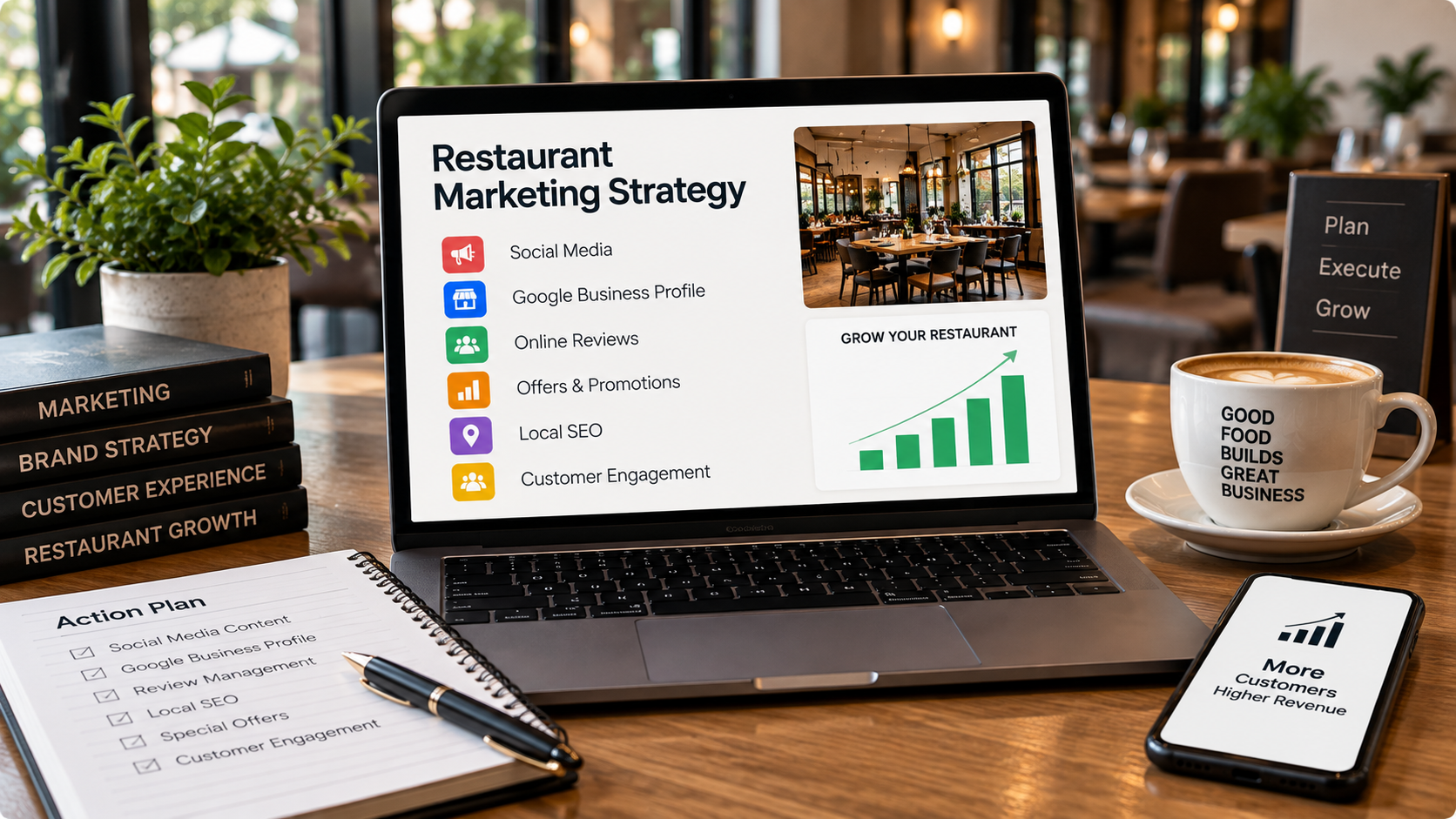
Ramadan is the single largest shift in restaurant demand in the UAE calendar, and it is predictable to the day. That combination — large and predictable — makes it the easiest major opportunity to prepare for and the most expensive one to improvise through.
What follows is the sequence we work through with restaurants, and the timing matters more than any individual tactic in it.
What actually changes
Daytime trade largely disappears. Evening trade compresses into a short, intense window around iftar, then a second, later wave around suhoor. Group size increases sharply — family gatherings, corporate iftars, friend groups — which changes the booking pattern from walk-in to reserved. Delivery volume rises and concentrates almost entirely into the pre-iftar hour. And the decision timeline lengthens: a regular Tuesday dinner is decided in minutes, while an iftar for fourteen people is decided days or weeks ahead.
That last point is the one restaurants most often miss. Because the decision happens early, the marketing has to happen earlier still.
Six to eight weeks before: foundations
Work out what you are actually selling before you advertise it. An iftar buffet at a fixed price per head, a set iftar menu, an à la carte iftar service, a suhoor menu, sharing platters for home delivery, and corporate or large-group packages are all different products with different audiences. Decide which you are genuinely set up to deliver well, and be specific about the rest — "we are open for iftar" is not an offer anyone can act on.
At this stage also get your visual assets ready. Ramadan creative needs to read as the occasion, not just as food: iftar spreads laid out, dates and beverages, the table prepared for a group, warm evening light. You do not need to shoot new dishes — AI food photography and creative design can build the seasonal set from the dishes you already have, in every size the channels need.
Four to five weeks before: make it findable
This is where most of the return sits, and it costs almost nothing.
- Update your Google Business Profile. Set Ramadan special hours — dated, not permanent — so the change reverts automatically. Add your iftar and suhoor menus to the menu fields. Upload the seasonal photography. Publish Google Posts covering your iftar offer, your suhoor timing and how to book.
- Create a page for it on your own site. A real page, not a PDF and not an Instagram post: iftar timings, the menu, the price per head, group capacity, booking method. This is what search can index and what a guest can forward to the eleven people they are organising.
- Make booking obvious. The number of restaurants that run a strong Ramadan campaign and then require a guest to hunt for how to reserve is remarkable. Tappable phone number, WhatsApp, and a booking form — all visible without scrolling.
Both profile management and local SEO work hardest here, because "iftar near me" and "iftar buffet" searches spike and resolve in the map pack.
Two to three weeks before: campaigns live
Paid activity should be running before Ramadan starts, aimed at the people making group decisions. Search campaigns catch the explicit intent — iftar buffet, suhoor, iftar booking, plus your area name. Social campaigns carry the visuals and build the shortlist, and they should target by location and by interest in dining out rather than broadly.
Budget should be weighted towards the two weeks before and the first week of Ramadan, which is when bookings are actually made. Spending heavily in the final week is spending after most decisions have been taken.
This is also the moment to contact people who came last year. If you have any kind of customer list — past bookings, delivery customers, app users, a WhatsApp list — they are the highest-converting audience available and the cheapest to reach. Most restaurants have this data scattered across systems and never use it, which is one of the clearest arguments for an owned ordering channel and a consolidated customer record.
During Ramadan: operational marketing
Three things matter once it starts.
Reply to reviews quickly. Volume rises, emotions run higher around iftar timing and service speed, and a prompt reply to a complaint about a fifteen-minute wait before the call to prayer genuinely changes how that review reads to the next person. At Ramadan volume this is difficult by hand, which is what automation is for.
Keep posting through the month. Content prepared in advance and scheduled, because nobody is writing captions during an iftar service. A month of visuals produced up front and scheduled is the only version of this that survives.
Watch the pre-iftar delivery hour. Demand concentrates into a narrow window, and a kitchen that accepts more orders than it can deliver on time buys itself a run of one-star reviews. Capping orders in that window protects the rating, which is worth more than the marginal covers.
Eid and after: the part everyone skips
Eid is its own trading pattern — family celebration meals, large groups, gifting — and it needs its own hours update and its own offer. Update your special hours again; a profile still showing Ramadan timings during Eid is a common and costly oversight.
Then, in the week after, do the retention work. You have just served a large number of people, many of them new, in a high-intent setting. Ask for reviews while the visit is recent. Add the group bookers to your contact list. Note what sold and what did not while you still remember. Restaurants that treat Ramadan as a standalone event lose most of that value; restaurants that treat it as a customer acquisition month keep it.
The short version
Decide the offer eight weeks out. Build the creative six weeks out. Fix hours, menus and the booking page five weeks out. Launch paid three weeks out. Contact last year's guests two weeks out. Schedule the content before it starts. Reply to everything during. Update for Eid. Collect reviews and contacts after.
None of that is complicated. All of it depends on starting early, which is the actual difference between restaurants that do well in Ramadan and restaurants that are busy but not better off. If you want a view of where your profile, hours, menu and booking setup currently stand, a free audit covers exactly that.